![BitConnect: Bitcoin Robots Trading Platforms [Bitcoin Robot Reviews]](https://www.bitconnect.co/wp-content/uploads/2026/03/logo-178x40.png)
Introduction
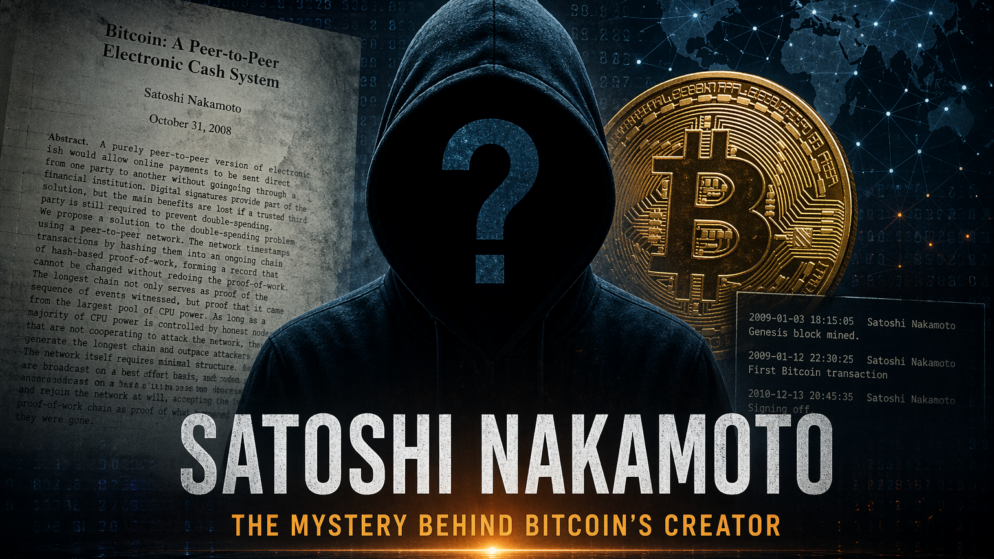
Satoshi Nakamoto is the name used by the unknown person or group who created Bitcoin—the world’s first decentralized cryptocurrency. Despite Bitcoin’s global impact, Nakamoto’s real identity remains one of the biggest mysteries in technology and finance. Understanding who Satoshi Nakamoto is requires exploring not only the origins of Bitcoin but also the broader philosophy behind decentralization and digital money.
The Birth of Bitcoin and Satoshi Nakamoto
In 2008, during the global financial crisis, Satoshi Nakamoto published a white paper titled “Bitcoin: A Peer-to-Peer Electronic Cash System.” This document outlined a revolutionary idea: a decentralized currency that operates without banks or intermediaries.
In January 2009, Nakamoto launched the Bitcoin network by mining the first block, known as the “genesis block.”
This marked the beginning of a new financial system based on blockchain technology—a distributed ledger that records transactions transparently and securely.
Why Satoshi Nakamoto Remains Anonymous
Satoshi Nakamoto is widely believed to be a pseudonym. The creator deliberately concealed their identity, possibly for several reasons:
- To avoid legal and regulatory scrutiny
- To protect personal privacy
- To ensure Bitcoin remains decentralized without a central authority
Nakamoto communicated with early developers via email and forums but gradually disappeared from public involvement around 2010.
Theories About Satoshi Nakamoto’s Identity
Over the years, many individuals have been suggested as possible candidates for Nakamoto. However, none have been conclusively proven.
Individual Candidates
Some well-known names include:
- Hal Finney – an early Bitcoin developer who received the first transaction
- Nick Szabo – a cryptographer linked to early digital currency concepts
- Adam Back – a creator of Hashcash, a precursor to Bitcoin
Despite investigations and media claims, no definitive proof has emerged.
Group Theory
Some experts believe Satoshi Nakamoto may be a group of developers rather than a single individual. The sophistication of Bitcoin’s design suggests collaboration across cryptography, economics, and software engineering.